HISTOIRE des ARTS DÉCORATIFS
Napoléan III


HISTOIRE des ARTS DÉCORATIFS
The Period at a Glance
Napoléon III
| Dates | The Second Empire · c. 1852–1870 |
| Key figures | Napoléon III · the Empress Eugénie · Baron Haussmann |
| Key makers | Henri-Auguste Fourdinois & Guillaume Gròhe (furniture) · Alphonse Giroux (Boulle revival) · Sèvres |
| The tell | Synthesis — Boulle, Louis XV rocaille and Louis XVI revival in one rich ensemble; ebonized brass marquetry and gilt bronze |
| Where to see it | Musée d’Orsay · Musée des Arts Décoratifs · Château de Compiègne |
The problem, as any specialist will tell you, is the word « Victorian. » The Napoléon III period is the French contemporary of the high Victorian era in Britain, and the two aesthetics share enough surface characteristics — the density of ornament, the love of dark and richly figured woods, the appetite for historicist reference — that the Anglo-American market has consistently conflated them. This is a category error of considerable financial consequence. The finest Second Empire furniture has almost nothing in common, technically or aesthetically, with its British contemporary; it belongs, in its ambition and its execution, to the tradition of Boulle and Riesener, not to the tradition of the Great Exhibition cabinetmakers. The collector who understands this distinction is operating with a significant informational advantage in a market that has not yet corrected it.

What follows is a collector’s orientation to the Second Empire decorative arts: their historical formation, their aesthetic philosophy, the workshops that produced them, the categories most worth pursuing, and the practical guidance necessary to find, assess, and bring them home. The period is deep enough to support a career of specialized collecting. This essay is an invitation to begin.
An Empire Built on Credit and Crystal: Paris Under Napoléon III, 1852–1870
The coup d’état of 2 December 1851 that transformed Louis-Napoléon Bonaparte from elected president to emperor-designate was, among its other consequences, one of the most significant events in the history of French interior decoration. The new emperor understood, with the instinctive political intelligence that characterized nearly everything he did before 1866, that the legitimacy of his regime required a physical argument — that the Second Empire would be demonstrated not merely in proclamations and military parades but in the appearance of the spaces in which public life was conducted. The great projects that followed — the completion of the Louvre, the reconstruction of the Tuileries apartments, the transformation of Paris under Baron Haussmann, the Universal Expositions of 1855 and 1867 — were simultaneously urban policy, economic stimulus, and aesthetic propaganda.
The social world that furnished itself in the Napoléon III style was new money on an extraordinary scale. The grands travaux of Haussmann’s Paris — the demolition of the medieval city and its replacement with the boulevards, the opéra, the parks, the covered markets — generated fortunes of a size and speed that the July Monarchy’s more cautious bourgeois prosperity had not produced. These nouveaux riches — financiers, railway contractors, department store founders, industrial manufacturers — needed hôtels particuliers, and they needed to furnish them in a manner that communicated both cultural legitimacy and current taste. The great Parisian cabinet-making ateliers, which had survived the Revolution, the Empire, and the constitutional monarchies by adapting their vocabulary to each successive regime, were ready for them.
The Empress Eugénie herself was the period’s most consequential arbiter of taste — a woman of genuine aesthetic intelligence whose passion for Marie-Antoinette and the style Louis XVI shaped the interiors of Compiègne, Saint-Cloud, and the Tuileries, and whose preference for the style Pompadour — the Louis XV rococo — gave the period its most characteristic domestic register. The result was an interior world of exceptional richness: layered, historicist, densely furnished, and animated by a quality of cultivated excess that the period’s best decorators have been rehabilitating, quietly and effectively, for the past three decades.
The Aesthetics of Synthesis: Historicism, Abundance, and the Art of the Ensemble
The animating aesthetic principle of the Second Empire interior is synthesis — the deliberate combination of historical styles, periods, and material vocabularies into a unified whole whose coherence depends not on stylistic purity but on the quality of execution and the authority of arrangement. This was not eclecticism in the pejorative sense that later critics applied to it; it was a considered philosophical position, influenced by the period’s archaeological scholarship, its enthusiasm for the Universal Exposition model of world cultural display, and its genuine conviction that the decorative arts of all European periods constituted a common inheritance available to the well-educated and well-resourced client.
The principal historical vocabularies deployed in Second Empire interiors were three: the Louis XIV style Boulle, with its ebonized case furniture and brass-and-tortoiseshell marquetry; the Louis XV style rocaille, with its carved and gilded seat furniture, its asymmetrical ornament, and its emphasis on comfort and feminine elegance; and the Louis XVI style néoclassique, with its architectural discipline, its rectilinear forms, and its restrained gilt-bronze vocabulary. A fully realized Second Empire salon might contain furniture in all three styles simultaneously — a Boulle cabinet flanking a chimneypiece, a suite of Louis XV-revival fauteuils arranged around a center table with a Louis XVI-revival marquetry top — and the quality of the ensemble depended entirely on the discernment of whoever assembled it.
What united these historical references was a shared commitment to material quality that the Second Empire, alone among nineteenth-century French regimes, could sustain at scale. The craft workshops of Paris were at this moment the most technically accomplished in the world. The chasers and gilders, the marqueteurs and ébénistes, the bronze founders and the silk weavers of Lyon were producing work whose technical standard was measurable, documented in the jury reports of the Universal Expositions, and competitive with anything that the preceding centuries had achieved. The Second Empire’s historicism was not pastiche; it was the application of living craft mastery to historical forms understood from the inside.
The Ateliers of the Faubourg Saint-Antoine: Craft, Industry, and the Great Maisons
The furniture industry of Second Empire Paris was organized around a tension that its finest products negotiated with extraordinary skill: the tension between the artisanal traditions of the Faubourg Saint-Antoine — the neighborhood of cabinet-makers and upholsterers that had supplied Paris with its finest furniture since the seventeenth century — and the new industrial methods that steam-powered machinery was making available to the larger workshops. The greatest Second Empire maisons resolved this tension by using machines for the preparatory and repetitive work — rough-cutting veneer, shaping secondary components — while reserving the operations that determined quality for hand labor: the marquetry cutting, the bronze chasing, the gilding, the carving, the upholstery.
The dominant figure among Second Empire ébénistes was Henri-Auguste Fourdinois (1830–1907), whose atelier on the Rue Amélot produced furniture of extraordinary technical ambition for the exhibition circuit and for private clients of the highest standing. Fourdinois won the medal of honor at the 1867 Universal Exposition with a carved walnut cabinet of such archaeological precision and technical bravura that it was immediately acquired by the South Kensington Museum — now the Victoria & Albert — where it remains one of the permanent collection’s most celebrated pieces. His work, and that of his competitor Guillaume Gròhe, represents the Second Empire tradition at its most ambitious: furniture conceived as argument, as demonstration, as a claim on behalf of the French craft tradition’s continued supremacy in the age of industrial production.
For the Boulle revival — the ebonized case furniture with brass-and-pewter marquetry and applied gilt-bronze ornament that is perhaps the most immediately recognizable Second Empire category — the central name is Alfónse Giroux, whose magasin de nouveautés on the Boulevard des Capucines supplied the Tuileries and the grande bourgeoisie with furniture, objects, and luxury goods of consistent quality. The Boulle revival workshops — Befort, Wabel, Defner — produced the cabinets, the cartonniers, the bonheurs-du-jour, and the side tables that furnished the libraries and smoking rooms of the Second Empire hôtel particulier. These pieces are today among the most collectible objects in the French furniture market, and among the most frequently encountered in the Parisian brocantes at prices that still undervalue the labor they represent.
Categories, Objects, and What to Look For in the Market
Case Furniture: The Boulle Revival
The ebonized case furniture of the Second Empire — cabinets, encoignures, meubles d’entre-deux, pedestal cabinets, cartonniers — is the category most fully identified with the period and the one most reliably found in the Parisian market. The vocabulary is consistent: ebonized fruitwood or pearwood carcass, panels of brass-and-tortoiseshell or brass-and-pewter marquetry in the Boulle tradition, applied gilt-bronze mounts in the Louis XIV style, feet in the form of toupie, bun, or bracket form. The best pieces have mounts of genuine quality — cast rather than stamped, chased rather than left in the rough casting, mercury-gilded rather than electro-gilded — and marquetry panels of the first-part (Boulle) variety, where the brass forms the design against a tortoiseshell ground, rather than the contre-partie, where the relationship is reversed.
Seat Furniture: The Louis XV and Louis XVI Revivals
The seat furniture of the Second Empire is among the period’s most satisfying collecting categories for the American market, because it combines genuine quality with a scale and comfort that translates naturally into contemporary interiors. The Louis XV revival produced fauteuils and canapés of carved and gilded beech or walnut, with cabriole legs, cartouche-shaped backs, and upholstery of silk damask or velours frappé; the Louis XVI revival produced the straighter, more architectural forms associated with the Empress Eugénie’s taste, with fluted legs, oval or rectangular backs, and a more restrained carved ornament. Suites of the period — a canapé with four or six fauteuils — are still findable at the Paris marchés aux puces and provincial auctions at prices that would be considered remarkable for comparable quality in any other period.
Decorative Objects: Porcelain, Bronze, and the Art of the Mantelpiece
The Second Empire mantelpiece was a composition in itself — a carefully arranged ensemble of clock, garniture, candlesticks, and decorative objects whose cumulative effect was to demonstrate the taste and means of the household. Sèvres porcelain, produced under imperial patronage and available in the fully elaborated pâte tendre and pâte dure traditions, supplied the finest components; the Paris porcelain factories — Jacob Petit, Samson, Gilles Père et Fils — produced the middle market in pieces of considerable quality. Gilt-bronze clock sets in the Louis XIV and Louis XVI revival styles were produced in large numbers and survive in quantity; the quality range is very wide, and the ability to distinguish the fine cast-and-chased bronze from the stamped and lacquered base metal is the essential skill for this category.
Academic Paintings and Drawings
The Second Empire was the high-water mark of the French academic painting tradition, and the Salon of the 1850s and 1860s — whose jury, under the presidency of Count Nieuwerkerke, enforced a rigorous academic standard that the Impressionist generation would eventually dismantle — produced work of extraordinary technical quality across the full range of genre: history painting, portraiture, landscape, genre, and the academic nude. For collectors of drawings — the category that rewards the most specialized knowledge and offers the most consistently undervalued entry points — the Second Empire ateliers produced preparatory studies, compositional drawings, and esquisses in charcoal, sanguine, and graphite that are among the finest draftsmanship in the French tradition. William-Adolphe Bouguereau, Alexandre Cabanel, Jean-Léon Gérôme, and their contemporaries trained in a system that valued drawing above everything; the works on paper that survive from their ateliers are the most direct record of that training.
A Collector’s Field Guide to the Second Empire
Reading the Object: Authentication Markers
The central authentication challenge for Second Empire furniture is distinguishing period work from the very substantial body of early-twentieth-century reproduction, which was produced in the 1880s through the 1930s by the same Faubourg Saint-Antoine workshops using the same techniques for a clientele nostalgic for the vanished imperial world. The most reliable markers are in the secondary wood, the hardware, and the gilding. Period case furniture uses solid secondary woods — poplar, lime, or chestnut — for drawer linings and backboards; twentieth-century reproductions increasingly use plywood from the 1920s onward, which is immediately identifiable. The screws of the Second Empire are hand-cut and slightly irregular; machine-cut screws of uniform thread indicate post-1870 work at the earliest. Mercury gilding on bronze mounts — identifiable by its warm, rich color and its matte texture in recessed areas — was banned in France in 1830 and cannot appear on work made after that date; if the mounts are fire-gilded, the piece is either genuinely pre-1870 or was gilded from old stock, which is not uncommon in revival work.
The Market in 2025: Why Second Empire Remains Undervalued
The Napoléon III market presents what specialists have been noting for decades: a systematic undervaluation relative to the earlier French periods — Louis XIV, Louis XV, Louis XVI — despite comparable quality of execution and, in many cases, superior documentation and provenance. The practical consequence is that a genuinely fine Second Empire ébéniste cabinet, a documented Fourdinois or Gròhe piece, or a complete suite of carved and gilded seat furniture can be acquired at prices that would seem extraordinary if the equivalent quality were on offer under a Louis XVI attribution. The Paris market rewards the specialist who understands the period. The generalist dealers at the marchés aux puces tend to group Second Empire with style maison bourgeois furniture and price accordingly; the dealers who love the period and understand its quality hierarchy are the ones worth finding and cultivating.
Where to Look: Paris and the Provinces
The single most productive venue for Second Empire furniture in Paris remains the marchés aux puces de Saint-Ouen, specifically Marché Paul Bert and Marché Serpette, where specialist dealers with genuine period knowledge are concentrated. The Carré Rive Gauche — the network of dealers in the sixth and seventh arrondissements between the Boulevard Saint-Germain and the Seine — has a smaller but higher-quality selection, with several dealers who specialize in precisely the Boulle revival and academic painting categories most characteristic of the period. For provincial material, the auction houses of Lyon, Bordeaux, and Toulouse regularly offer Second Empire pieces from the hôtels particuliers of the provincial bourgeoisie, often in better condition and at significantly lower prices than comparable Paris market material. The brocanteurs of Provence — particularly in L’Isle-sur-la-Sorgue and the villages of the Luberon — offer the most accessible entry point for the collector at the beginning of a Second Empire education.
Bringing It Home: US Import & Customs
Objects genuinely dating from the Napoléon III period (1852–1870) are more than one hundred years old and qualify for duty-free import into the United States under the provision covering antiques over a century in age. The documentation to request from your dealer or auction house includes a written receipt describing the piece, its approximate date, its country of origin, and its estimated value; photographs of the piece and any marks, stamps, or labels; and, for significant acquisitions, a formal expertise from a recognized French specialist or a major auction house. CITES restrictions apply to any piece containing tortoiseshell, ivory, or rosewood (Dalbergia species); the Boulle revival cabinet with genuine tortoiseshell panels will require CITES documentation and a US Fish & Wildlife import permit. Most established Paris dealers work with shipping agents experienced in transatlantic customs and insurance; ask for agent recommendations as a matter of course when making any significant purchase.
Paris Rebuilt: Haussmann’s City and the World of the Second Empire Interior
To understand the Napoléon III style is to understand the physical Paris that was built to receive it. The Paris of 1870 was not the Paris of 1848: it was a different city, rebuilt at a speed and scale unprecedented in European urban history, and the furniture and objects produced during those eighteen years were made for interiors that no longer exist in their original form. The hôtels particuliers of the Plaine Monceau — the neighborhood developed in the 1850s and 1860s for the new financial aristocracy of the Second Empire, along the streets that still bear the names of its builders (Avenue Van Dyck, Boulevard Malesherbes, Parc Monceau itself) — were the principal clients of the finest Second Empire ébénistes. Walking the eighth arrondissement today, through the surviving Haussmann apartment buildings with their côté cour entrances and their doubled windows, is the closest available approximation of the spatial world those interiors inhabited.
For the collector visiting Paris with the Second Empire in mind, three institutions are essential. The Musée d’Orsay contains the period’s decorative arts alongside its painting and sculpture, and the permanent installation offers the best single-site orientation to what the Second Empire made and why it made it. The Musée des Arts Décoratifs on the Rue de Rivoli holds an exceptional collection of Second Empire furniture and objects, including documented workshop pieces, in period-room installations that make the ensemble logic of the style comprehensible. And the Château de Compiègne — the imperial residence where Eugénie’s taste is most fully preserved — remains the definitive experience of a Second Empire interior at its most complete and most coherent: a room-by-room argument for what this period, at its best, actually looked like.
A Note from Jeff
I began collecting academic drawings of the Second Empire period almost by accident — a sanguine study attributed to a student of Cabanel that I bought at a Lyon auction in my second or third year of working the French market, for a price I would now find embarrassing to admit. I bought it because the draftsmanship stopped me: the quality of observation in the figure, the confidence of the line, the evidence that whoever had made this had been trained in a system that took the act of drawing with absolute seriousness. I did not know yet what I know now about the Salon tradition and the atelier system that produced it. I just knew that the drawing was exceptional and that no one else in the room seemed to think so.
That gap — between what a period actually achieved and what the market currently believes it achieved — is where the most interesting collecting happens. The Second Empire is full of those gaps. The Boulle revival cabinet in the back of the Serpette stall, priced as a decorative object rather than as a document of one of the great furniture-making traditions in European history. The carved walnut fauteuil at the brocante outside Uzès, its original silk replaced at some point in the 1960s, the carving still crisp, the legs still true, the price still reflecting the assumption that nineteenth-century means lesser. The academic study in charcoal, unsigned, from an atelier that trained three Prix de Rome winners, sitting in a folder of unsorted works on paper because no one has taken the time to look at it properly.
Taking the time to look properly is, in the end, the whole of collecting. The Second Empire rewards that attention more generously than almost any other period in the French decorative arts. The market will catch up eventually. In the meantime, there is work to do.
Bring the look home
Objects in the Second Empire spirit
Framed collage prints from LA GALERIE that carry the rich, layered historicist ensemble into a modern room.
 Fontainebleau Framed Collage Fontainebleau Framed Collage |
 Versailles Collage Print Versailles Collage Print |
 St Tropez Framed Collage Print St Tropez Framed Collage Print |
 Grasse Framed Collage Print Grasse Framed Collage Print |

One letter a month on the French table: one table, the pieces on it, and where each pattern came from.
Own a shop or design studio? Open a wholesale account →
Written by
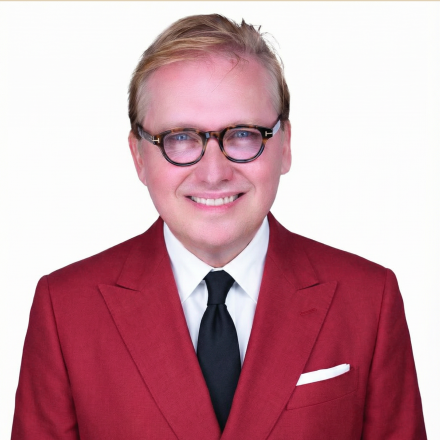
Jeff M. Barnes
Twenty years collecting 18th- and 19th-century French works and leading small-group sourcing journeys through the markets, fairs, and dealer back rooms of France. The Grammar of Style is the field report from that work.
Instagram Pinterest YouTube TikTok Threads Facebook LinkedIn Bluesky
Keep reading — The Grammar of Style
 Movement MovementThe July Monarchy Read → |
 Movement MovementL'Art Nouveau Read → |


